Academic courses
August 2, 2024 2025-11-20 8:15Academic courses
Academic courses – Language training, physical education and sports department
Bulgarian language (for foreigners)
Business English – Master's
In the course the knowledge from the Bachelor’s degree is confirmed and enriched by emphasizing on the spoken part.
The aim of the course is the students to be able to talk fluently in English for a better professional realization.
Lecturers:
- Senior Lecturer PhD Tsvetina Tsvetanova Tsakova
English for Business Management, Tourism, Ecology and Landscape Architecture
In the course the most commonly used specialized terms and phrases from the respective professional field are studied. Translations of articles are made. Grammar is studied through the texts. Discussions are carried out.
The aim of the course is acquisition of the terminology in the respective field and sophistication of the communication skills on the part of the students.
Lecturers:
- Senior Lecturer PhD Tsvetina Tsvetanova Tsakova
English for Engineering design/Wood technology/Veterinary Medicine
The course objective is to improve the students’ language skills through studying English for specific purposes. The course is taught in the first four semesters and ends with a grade on the basis of continuous assessment. The course content encompasses:
- Translation of specialized texts. This is the main part of the English language training and the texts to translate are selected according to the average level of the group. The aim is to learn key vocabulary in the respective fields.
- Learning specialized vocabulary. The activity is a subject to continuous assessment at the end of each semester.
- Delivering presentations to improve oral production skills.
- Grammar revision and exercises.
- Translation of specialised texts (course project). This includes:
• selecting the text and preparing a vocabulary list of unfamiliar words;
• test translation of paragraphs;
• delivering a presentation on the text.
Lecturers:
- Доц. д-р Таня Василева Панчева
English for Forestry/Landscape Architecture
The course objective is to improve the students’ language skills through studying English for specific purposes. The course is taught in the first four semesters and ends with a grade on the basis of continuous assessment. The course content encompasses:
- Translation of specialized texts. This is the main part of the English language training and the texts to translate are selected according to the average level of the group. The aim is for the students to learn key vocabulary in the field of forestry/landscape architecture.
- Leaning specialized vocabulary (from a word list). The activity is subject to continuous assessment at the end of each semester.
- Delivering presentations to improve oral production skills.
- Grammar revision and exercises, with the grammar tests including only grammar material covered during the course.
- Preparing independently translated specialized text of students’ own choice (course project). This includes:
A. selecting the text and preparing a vocabulary list of unfamiliar words;
B. test translation of paragraphs;
C. delivering a presentation on the text.
Lecturers:
- Senior Lecturer PhD Biliana Stefanova Ovcharova
English (for Agronomy and Plant Protection)
General course description:
The course syllabus is designed for 116 seminars, taught in the course of four semesters. It focuses on the formation of skills for oral and written English language communication for professional and academic purposes at level B2 from the Common European Framework of Reference for Languages. The language course finishes with continuous assessment, based on the assessment of students’ dialogues, monologues, written assignments and tests.
Goal and objectives of the course: Acquisition of oral and written communication skills for professional and academic purposes at level B2, performing tasks for:
- reading/listening and analysing texts from the realms of botany, soil science and plant protection;
- dialogic and monologic speaking for the purpose of occupational information exchange, using correctly basic verb tenses and aspects;
- writing an email, report, article abstract, memo and other forms of academic and everyday written communication, making a correct use of relevant syntactic patterns.
Lecturers:
- Senior Lecturer PhD Ivanka Natova Natova
English (for Plant Protection) – Master's
General course description:
The course syllabus is designed for 60 seminars, taught in the course of two semesters. It focuses on the acquisition of specific terminology in the fields of vine-growing, pomology, weeds, pests and plant protection, academic life and career development. Another aim of the syllabus is the improvement of skills for oral and written English language communication for professional and academic purposes at level B2 from the Common European Framework. The language course finishes with continuous assessment, based on the assessment of students’ dialogues, monologues, written assignments and tests.
Goal and objectives of the course: Improvement of oral and written communication skills for professional and academic purposes at level B2, performing tasks for:
- reading/listening and analysing texts from the fields of vine-growing, pomology, pests and plant protection, academic life and career development.
- dialogic and monologic speaking for the purpose of occupational information exchange, using correctly different verb tenses and aspects;
- writing a report, article abstract, bibliographical note, etc.
Lecturers:
- Senior Lecturer PhD Ivanka Natova Natova
English (for Veterinary Medicine)
General course description:
The course syllabus is designed for 120 seminars, taught in the course of four semesters. It focuses on the acquisition of basic terms from the realms of animal anatomy, nutrition and pathology and the formation of communication skills for professional and academic purposes at level B2 from the Common European Framework of Reference for Languages. The language course finishes with continuous assessment, based on the assessment of students’ dialogues, monologues, written assignments and tests.
Goal and objectives of the course: Acquisition of oral and written communication skills for professional and academic purposes at level B2, performing tasks for:
- reading/listening and analysing texts from the realms of animal anatomy, nutrition and pathology;
- dialogic and monologic speaking for the purpose of occupational information exchange, using correctly different verb tenses and aspects;
- writing an email, report, article abstract, process description, etc., making a correct use of relevant syntactic patterns.
Lecturers:
- Senior Lecturer PhD Ivanka Natova Natova
French language
German language
The course objective is to improve the students’ language skills through studying German for specific purposes. The course is taught in the first four semesters and ends with a grade on the basis of continuous assessment. The course content encompasses:
- Translation of specialized texts. This is the main part of the German language training and the texts to translate are selected according to the average level of the group. The aim is to learn key vocabulary in the respective fields.
- Learning specialized vocabulary. The activity is a subject to continuous assessment at the end of each semester.
- Delivering presentations to improve oral production skills.
- Grammar revision and exercises.
- Translation of specialised texts (course project). This includes:
• selecting the text and preparing a vocabulary list of unfamiliar words;
• test translation of paragraphs;
• delivering a presentation on the text.
Lecturers:
- Senior Lecturer Evelina Todorova Georgieva
Latin language
The Latin language course is focused on the understanding of the Latin terminology as an important element in the system of scientific knowledge. The teaching aims at mastering this minimum of specialized terms, word-forming elements and structures, which allows full understanding and active use of established Latin terms as well as creating new ones in case of need.
The grammar is represented briefly, as main rules and paradigms. Each grammatical unit is accompanied by exercises and “Lexical minimum”, which includes the most used words with their basic forms. Special attention is paid to the word-formation section: the morphemic structure of the word, types of words, word-forming methods.
Lecturers:
- Senior Lecturer Iliana Aleksandrova Ilieva-Blagoeva
Methods of Teaching
Lecturers:
- Assoc. Prof. Radostina Kancheva Popova-Terziyska, PhD
Pedagogy
Physical Education and Sport
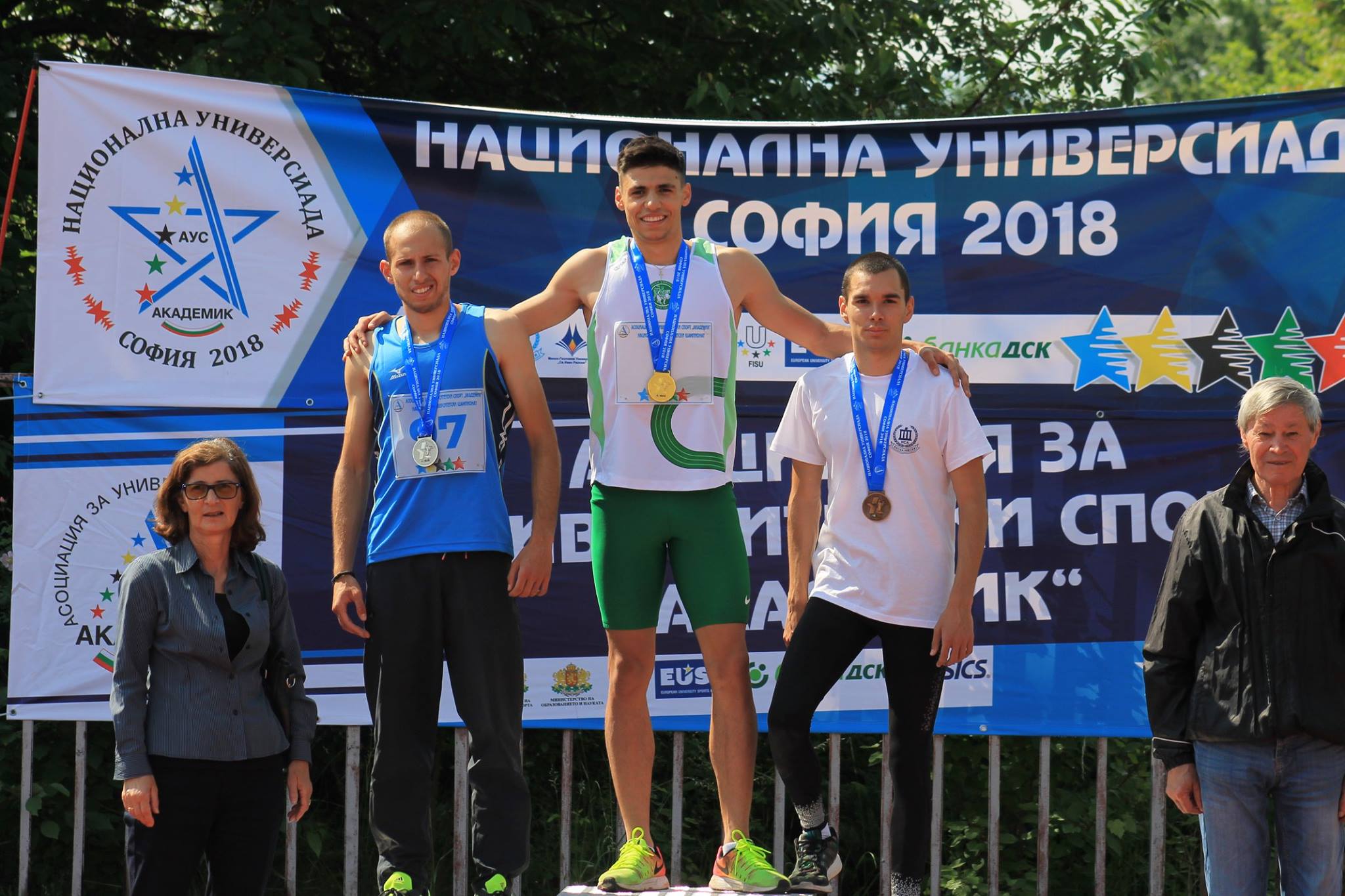
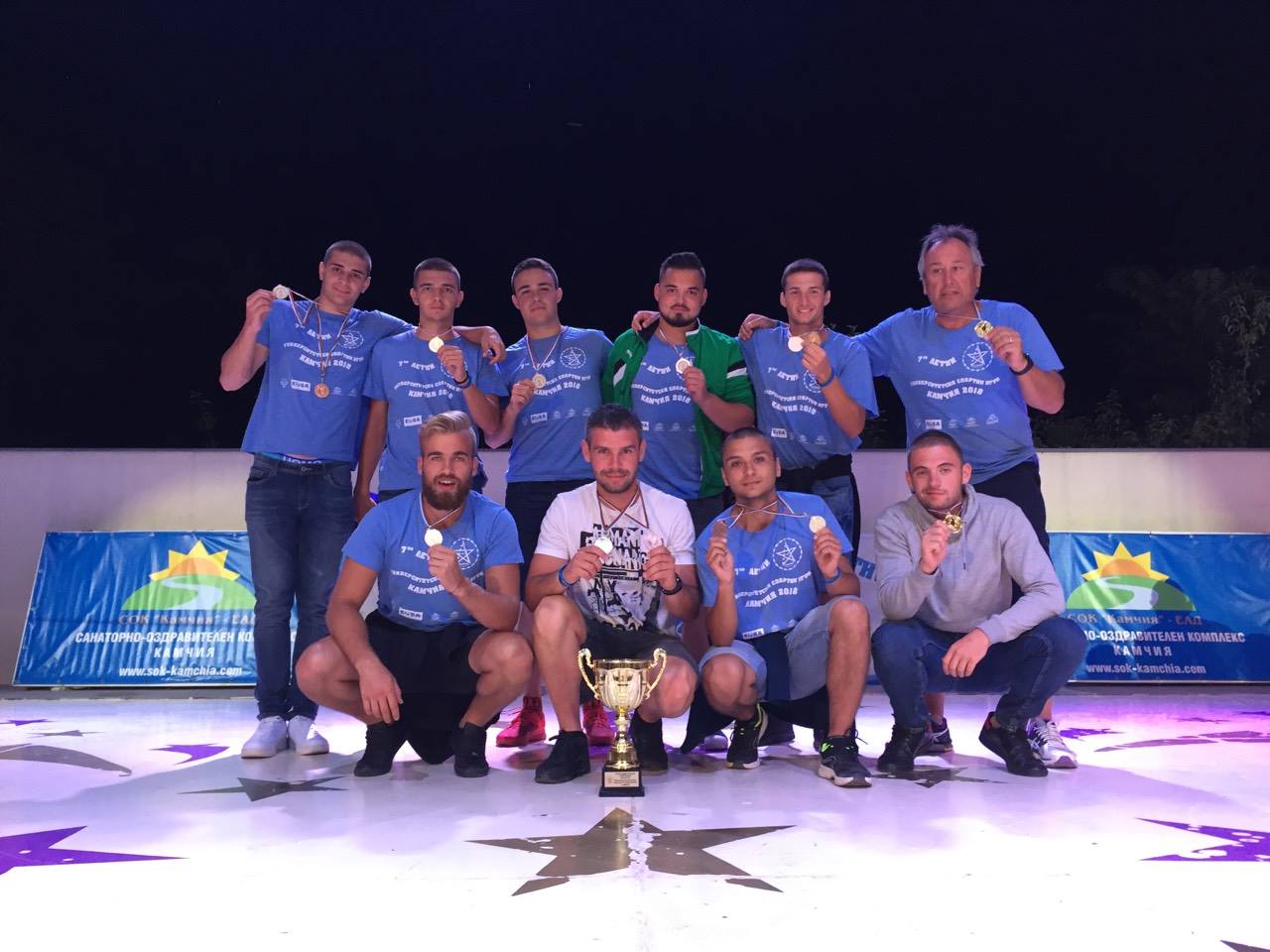
The course: The course „Physical education and sports“ is being studied in specialties „Agronomy“ and „Plant protection“ of degree „Bachelor“, I and II course as a required type no ECTS credits.
Course objectives: In terms of University of Forestry, to achieve maximum health effect through purposefully focused motor training. Except the complex impact on the students’ body, the program also has an applied focus, tailored to the future career of the students. The main tasks are through motor activity and its impact on the various subsystems of the body to improve the capacity of young people. To apply positive effects on CNS and psychosomatics, expressed in the improvement of emotional state, cheerfulness, confidence, increased mental capacity.
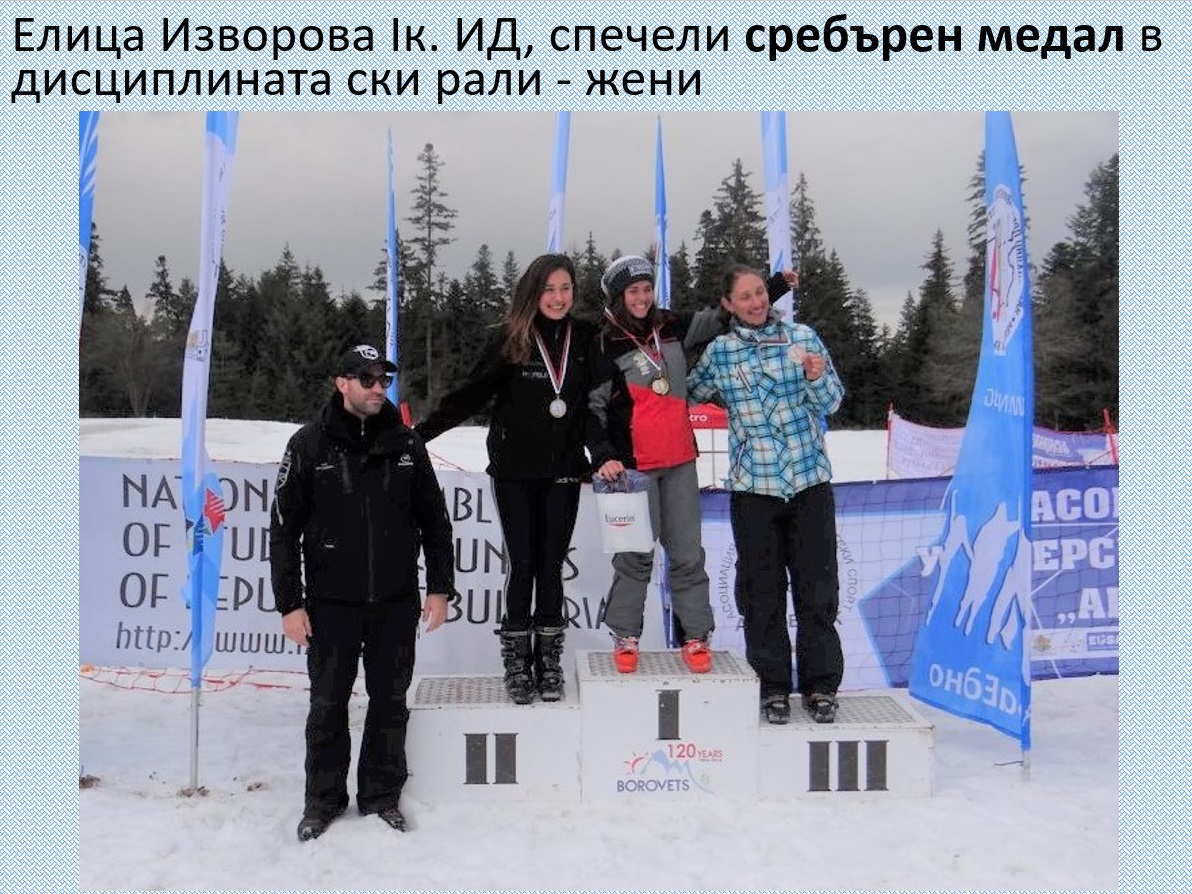
Course description: Course contents includes general and special – theoretical knowledge related to the specifics of sports. Students learn the history of the sport, they get the most common ideas about the biomechanics of movement, about the physiological impact of physical exercises on the body and methodologies for developing basic motor skills. Sides of sports training and principles of building of educational – training process are also revealled, as well as the option to develop one of his training. The main motive in the program content is sports training. During their two years of study, students make choices of sports such as football, tennis, volleyball, swimming, fitness, through elected – mandatory form and focus on improving the activities of the cardio-respiratory system and improving their motor potential. Psychomotor students responded favorably in locomotor activity in sports such as table tennis, calanetics and skiing. Programmes have been developed in swimming, basketball, volleyball, fitness, tennis, table tennis, calanetics. Typical types of sports for physical, technical, tactical and psychological training are included. The knowledge and practical skills gained in this course will allow students to conduct sports training themselves in the future. To take care of their motor development and increase their legal capacity.
Teaching Staff:
1. Assoc. Prof. Yordanka Zlatarova, PhD – Tennis, Calanetics, Table tennis, Fitness, Skiing, Water sports / rowing / and Tourist orientation and extreme sports.
2. Senior Lecturer Zhelyazko Georgiev, PhD – Football (Soccer), Volleyball, Tennis, Table tennis, Skiing ,Rowing, Swimming.
3. Senior Lecturer Bronislava Ruseva – Swimming, Volleyball, Table tennis, Rowing.
4. Senior Lecturer Petar Grozev – Football (Soccer), Volleyball, Table tennis, Skiing ,Rowing, Swimming
5. Senior Lecturer Hristo Kolev – Volleyball, Table tennis, Skiing, Rowing, Swimming.
Russian language for business management
Content:
- Academic language and terminology specifics
- Russian grammar system’s functions in academic and science domains
- Theory and practice of academic translation
- Mastering Russian language as an academic and professional communication tool
Aims:
- Upgrading Russian language skills as business management verbal and written communication tool
- Russian academic language theoretic and practical knowledge and skills
Key topics covered:
- General notions in business management
- Economy and management
- Business management in environment management context
- Business management specifics in Russia
Skills students acquire:
- Deep mastering of business management language tools
- Composing, summarizing and analysis of a professional text
- Written and oral communication skills
Russian language for forestry
Content:
- Russian grammar system
- Russian grammar system’s functions in academic and science domains
- Science language and terminology specifics
- Academic translation language principles
- Texts and exercises helping learning Russian as specialized communication tool
Aims:
This course aims to prepare the students studying Forestry to work in various business, academic and administrative spheres, where they will be able to use Russian as communication tool and to communicate on specific topics of forest management, forestry, soils etc.
Key topics covered:
- Forests as a system
- Forests and environment
- Soils and soil management
- Forestry and forest asset management
Skills students acquire:
Specialized:
- forest systems specifics
- forest asset management
Language:
- academic and technical translation and interpretation
- academic text summary
- academic text annotation
- written and verbal communication tools mastering
- academic and business communication
Russian language for Interior and furniture design
Content:
- Russian language phonetical, ortography and orthoepy topics
- Theoretical foundations of morphology, syntactics, word forming, lexicology and stylistics of the professional Russian, related to its use as communication tool
- Lexical minimum, required for achieving the education targets
- Scientific terminology and translation theory
Aims:
- Deepening and broadening of the practical and theoretical knowledge of Russian
- Mastering Russian language as communication tool for the following:
– reading and translation
– specialized text reading
– presentation on specialized topics
Key topics covered:
- Wood as part of Russian architecture and building
- Russian forests
- Interior comparison the East and the West
- Engineer design and asset management
- Advertisment and design
- Wood mechanical treatment methods
Skills students acquire:
- Oral and written business communication
- Encountering marketing and advertorial vocabulary and communication techniques
- Juridical terminology mastering
- Negotiations with Russian business partners
- Specialized translation and interpretation
- Composing, annotating and analysis of specialized text
Russian language for Mechanical wood technology
Content:
- Expanding the lexical stock of words, phrases and terms used for professional communication;
- Consolidate and upgrade the grammar of specialized language;
- Improvement of speech knowledge and skills acquired in the initial course of training of bachelors in Russian reading and translation of literature.
Aims:
- Improving the knowledge and skills of oral and written communication in the Russian language in the field of technology of wood;
- Extend the theoretical and practical knowledge;
- Acquiring knowledge and skills to use specialized Russian language as a communicative tool:
– For reading and translation of Russian literature in the specialty;
– For conducting presentations and conversation topics in the specialty;
– Deliver talks on professional topics
Key topics covered:
- Mechanical wood treatments methods
- Contemporary furniture design aesthetics
- Contemporary furniture manufacturing
- Middle Ages interiors
- Baroc interiors
- 20 century multi-slylism
- Contemporary living interior. Trends and forecasts
Skills students acquire:
- Composing, summarizing and analyzing scientific and technical text
- Verbal and written professional communication
- Presentation skills on topics of specialty
Russian language, Mechanical wood technology – Master's
Content:
- Extension of the lexical stock of words, phrases and terms used for professional communication;
- Consolidate the grammar of specialized language;
- Improvement of speech knowledge and skills acquired in the initial course of training of bachelors in Russian reading and translation of literature.
Aims:
- Improving the knowledge and skills of oral and written communication in the Russian language in the field of technology of wood;
- Extend the theoretical and practical knowledge;
- Acquiring knowledge and skills to use specialized Russian language as a communicative tool:
– For handling Russian-speaking sources in the specialty;
– For conducting presentations and talks on specialized topics;
– Deliver talks on professional topics
Key topics covered:
- Wood structure
- Wood types analysis
- Mechanical properties of the wood
- Wood protection from biological pests
- Hydrothermical processing of the wood
- Methods of wood mechanical processing
- Specifics of wood treatment
- Waste management
- Contemporary approaches in wood treatment
Skills students acquire:
- Verbal and written communication skills
- Academic and business presentation skills
- Business negotiations
- Handling the terminology of the specialty
School legislation, administration and economics training
Tourist orienteering and extreme sports
Course content: The general theoretical practice focuses on the preparation that is being done before the beginning of touristic aktivities and grants the safety during their performance. Students will learn the basic rules of hiking and staying in the mountain with various of people. The course is directed towards thorough examination of topography work with tourist and sport orientation map and the use of compass. Furthermore the participants will be innovations in the sports animation such as new mountains Rila, Pirin, Rodopite and to the latest innovations in the sports animation, such as new tourist attractions in the country, as well as physical activities that could be practiced there. In the practical part of the course a main objective is acquiring the technical skills from sports such as alpinism, sport orientation and tourism. In the end of the program every participant will have to follow a certain route with checkpoints along in and to secure a partner while climbing a natural or artificial wall.
Lecturers:
- Assoc. Prof. PhD Yordanka Metodieva Zlatarova