History
July 11, 2024 2025-06-26 7:44History
The beginning of the higher forestry education in Bulgaria is considered to be 28th January 1925 when the Academic Council of the Sofia University made a decision to establish a Department of Silviculture at the Faculty of Agronomy at the University. The Department “Specific Silviculture” at the Faculty of Agronomy was established in 1923. The aims of the department were to provide training in Silviculture to agronomy specialists and create preconditions for establishing a Department of Silviculture at the Faculty of Agronomy.
In response to the letters of the Ministry of Agriculture and State Property and the Society of Foresters in Bulgaria, a committee was appointed to prepare a statement in connection with the opening of Department of Silviculture. Thus on 28 January 1925 at the working meeting of the Academic Council a decision for establishing a Department of Silviculture at the Faculty of Agronomy of the Sofia University was made. At the following working meeting (held on 20 February 1925) the Academic Council of the Sofia University made a decision to begin the training course immediately and the Department of Silviculture is considered to have been opened since the summer semester of 1925. Meeting previously undertaken commitments,the Ministry of Agriculture and State Property notified the Rector of the Sofia University by letter dated 30 December 1925 that two training and experimental forestry ranges had been allocated for the training needs of the students from the Department of Silviculture. The first one was situated in the coniferous area of Yundola, called Geshova Planina (now named after G. St. Avramov – Yundola) and the second one was situated in the broadleaved area of the village of Burziya, called Petrohan Pass (now called Petrohan – Burziya). In 1938 for the needs of the students the Ministry of Agriculture and State Property allocated another training and experimental forestry and game range – Vitinya.
In 1947, the Department of Silviculture at the Agronomy and Silviculture Faculty at the Sofia University joined the previously established Department of Silviculture at the Plovdiv University and a Faculty of Silviculture at the Sofia University was established. It was one of the four faculties on the ground of the establishment of the Agricultural Academy in 1947.
By Decree of the Presidium of the National Assembly dated 12 January 1953 three independent higher educational institutions were established: Higher Institute of Forestry, Higher Institute of Veterinary Medicine and Agricultural Academy ‘G. Dimitrov”, the three of them being located in Sofia. The first Rector and Vice-Rectors to be elected were B. Stefanov, a member of the Academy of Sciences and Prof. Dimitar Stefanov, Assoc. Prof. Tsvyatko Hristov and Assoc. Prof. Stoichko Hristov.
The following five major courses were established: Forestry, Urban Landscape Design, Mechanical Wood Technology, Chemical Wood Technology, Forest Use and Engineering. After its establishment as a separate higher educational institute the Higher Institute of Forestry was provided with own building in Darvenitsa Quarter which is still the main building of the university.
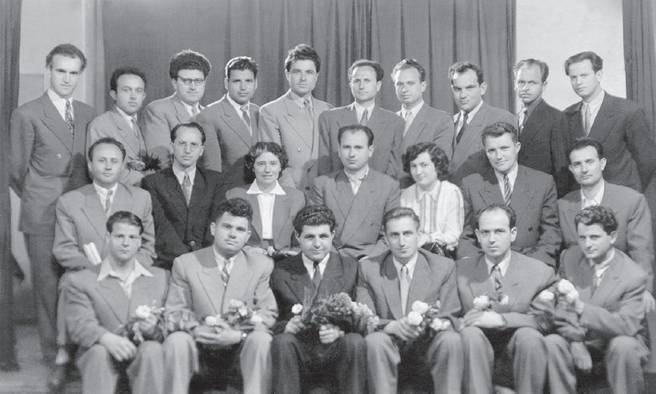
Part of the teaching staff of VLTI (24.V.1958) In the first row, from left to right: Svilen Nikolov, Viktor Donov, Georgi Dimitrov, Venko Kalinkov, Bozhin, Bogdanov, Ivan Dobrinov, Petar Kostov, Zhelez Donchev, Georgi Dimitrov, Alexander Iliev; in the second row from left to right: Sava Ribarov, Hristo Sirakov, Mila Atanasova, Penyu Karadochev, Tsvetana Makedonska, Stoichko Hristov, Yosif Zhelyazkov; seated from left to right: Radoslav Zarev, Ivan Mihov, Geno Donchev, Peyu Belyakov, Spas Dushkov, Rayko Petrov
In the autumn of 1955 the foundations of the Institute’s park and botanical garden were laid as suggested by B. Stefanov, a member of the Academy of Sciences.
The Scientific and Research Centre at the Higher Institute of Forestry was established in 1965. Apart from teaching staff of the Institute, specially employed scientific research workers and technical assistants work there. They all contribute to the development of the theoretical and applied scientific research in the field of Forestry Science in Bulgaria.
As a result of a number of transformations, in 1972 the following four major degree courses, which were unique for Bulgaria, were established in the Higher Institute of Forestry: Forestry, Landscape Design, Mechanical Wood Technology and Mechanization of Forestry and Forest Industry.
Specialized training was established by an order of the Committee of Science, Technological Progress and Higher Education (30/03/1973) to supplement these courses. Thus within the speciality of forestry, the following specializations were set up: Silviculture, Forest Management (which formed the basis of the new Faculty of Industrial Management) and Environmental Protection (which in 1990 grew into the speciality of ecology and Environmental Protection).
Specializations in Woodworking and Furniture Production were set up within the speciality of Mechanical Wood Technology; specializations in Mechanization and Automation of Timber Processing and Furniture Industries and Mechanization of Forestry and Harvesting were set up as part of the speciality of Mechanization of Forestry and Forest Industry.
Pursuant to an Order of the Bureau of the Council of Ministers (07.08.1974) two faculties were set up in the Higher Institute of Forestry:
– Faculty of Forestry and Landscape Design
– Faculty of Forest Industry
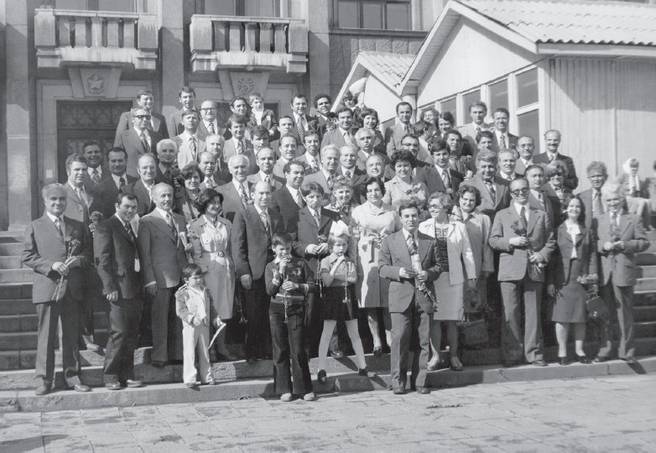
The Faculty of Forestry and Landscape Design covered the speciality of Forestry and its specializations, and the speciality of Landscape Design. Prof. Ivan Dobrinov was elected as the first Dean of the Faculty of Forestry and Landscape Design, and Boris Kitin and Georgi Dimitrov, Associate Professors, were elected as Vice-Deans.
There were two specialities in the Faculty of Forestry as well: Mechanization of Forestry and Forest Industry and Mechanical Wood Technology with their associated specializations. Prof. Nino Statkov was elected as the first Dean of the Faculty of Forestry, and Andrey Kavalov and Zarko Popov, Associate Professors, were elected as Vice-Deans.
During the academic year 1973/1974 about 300 students studied in the Higher Institute of Forestry (compared to 80 students in 1945) and the structure of the teaching staff was the following: 15 professors, 34 associate professors and 57 assistant professors (compared to 4 professors, 1 associate professor and 3 assistant professors in 1945).
A research laboratory on Modification of Wood and four specialized research laboratories (Hunting and Game Range and Evaluation of Hunting Trophies; Research and Testing of Woodworking Machines and Assembly Lines; Research and Testing of Forestry and Wood-harvesting Machines; Reproduction and Management of Forest Resources) were set up in the Institute during that period. Within the Scientific Research Centre, a division for Landscape Research and Design was set up in 1977. All these units, in whose activities students were also successfully involved, worked responsibly and achieved significant results related to the development of forestry science and practice, research and design activities.
After 1979 another educational reform was carried out in the Institute, as well as in all other higher schools in Bulgaria. A three-stage structure of professional/vocational training was introduced. For the specialities in the Higher Institute of Forestry the first educational stage covered widely-based general training (two-year course of study); the second stage covered special subjects and a certain amount of fundamental knowledge (two-year course of study) and during the third stage students studied highly specialised subjects for the period of one year. Upon graduating they were directed towards a particular career and place of work in accordance with the existing system of pre-locating graduate students for obligatory three-year period.
In view of the above mentioned reorganisation, the teaching staff of the Higher Institute of Forestry developed new curricula which even now, although with some amendments and additions, form the basis of students’ training in Forestry, Forest Industry and Environment Protection.
A Faculty of Public Professions at the Higher Institute of Forestry was set up in 1979. The Faculty was aimed at providing students with more opportunities for a fuller participation in all the different spheres of economy and public life. Petar Dankov, Associate Professor was the first Dean to work on a voluntary, unpaid basis. Later on the Faculty grew into a Faculty of Post-Graduate Education.
A specialised Environment Protection Laboratory was established following a Decision of the Academic Council in March 1987, in order to facilitate the process of teaching and scientific research.
From Institute to University. New Faculties
This stage of the development of higher forestry education was related to the social, political and economic changes, which occurred in Bulgaria after 1990. 1995 was the most significant year regarding the renaming of the Institute as a University. On 27th July 1995, the Higher Institute of Forestry was given the status of a university by the National Assembly of the Republic of Bulgaria. The National Assembly also approved of the name – the University of Forestry – suggested by the Academic Council of the Higher Institute of Forestry. The new training and laboratory building was officially opened in the same year.
A new moment in the development of the forestry education was the introduction of some paid education from 1991/1992 till 1998/1999, alongside of the traditional free-of-charge education. A minimum state fee was introduced for all students from the academic year 1999/2000.
In terms of content, the changes in the Higher Institute of Forestry, now named the University of Forestry, are related to several important circumstances:
First, this is the opportunity to conduct training of specialists with higher education in three, out of four, basic scientific areas: natural science, technology and humanities.
Second, new model of three educational stages was adopted: Bachelor of Science, Master of Science as well as the academic degree of Doctor of Science.
Third, this is the establishment of the new training and scientific structure of the University. Following a Decision of the Academic Council on 14th September 1994, two new faculties were established:
The Faculty of Agronomy and the Faculty of Veterinary Medicine. G. Trenchev, Associate Professor, was elected as the first Dean of the Faculty of Agronomy and Prof. G. Kovachev was elected as the first Dean of the Faculty of Veterinary Medicine. At the same time a restructuring of the two existing faculties was carried out and as a result three independent faculties were established:
a) Faculty of Forestry – K. Lyubenov, Associate Professor – Dean; K. Bogdanov, Associate Professor and Al. Tashev, Associate Professor – Vice Deans;
b) Faculty of Ecology and Landscape Architecture – E. Pavlova, Associate Professor – Dean and Iv. Genov, Associate Professor – Vice-Dean;
c) Faculty of Forest Industry – B. Dinkov, Associate Professor – Dean; H. Mihailov, Associate Professor and G. Blagoev, Associate Professor – Vice-Deans.The Faculty of Part-Time and Post-Graduate Education was also established and I. Vasileva, Associate Professor, was elected as Dean.
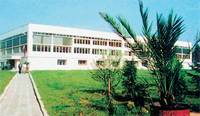
The Faculty of Industrial Management was established on 20th October 1995, following a Decision of the Academic Council. Its first Dean was I. Iovkov, Associate Professor and its first Vice-Dean was Iv. Paligorov, Associate Professor. So, towards 1996 the University of Forestry had the following faculty structure: Faculty of Forestry; Faculty of Ecology and Landscape Architecture; Faculty of Forest Industry; Faculty of Agronomy; Faculty of Veterinary Medicine; Faculty of Industrial Management; Faculty of Part-Time and Post-Graduate Education (since 1999 it was transformed into a Post-Graduate Centre).
The Faculty of Forestry provides the training of students in the following specialities: Forestry – BSc and MSc and Forest Use – MSc.
The Faculty of Ecology and Landscape Architecture provides the training of students in the specialities of Ecology and Environment Protection (BSc and MSc) and Landscape Architecture (MSc).
The Faculty of Forest Industry includes four specialities which are granted the following degrees: Woodworking and Furniture Production – BSc; Mechanical Wood Technology – MSc; Woodworking Machines and Equipment – MSc and Interior and Furniture Design – MSc.
The Faculty of Agronomy trains students in the specialities of Agronomy and Plant Protection (BSc and MSc).
The Faculty of Veterinary Medicine trains students in Veterinary Medicine (MSc).
The Faculty of Industrial Management trains students in: Industrial Management (BSc and MSc) offering specializations in Forestry Management, Forest Industry Management and Alternative Tourism (BSc).
The Faculty of Part-Time and Post-Graduate Education provides training for part-time students and the conduct of short-term and long-term qualifying training courses in different fields of economy, science, technology and art.
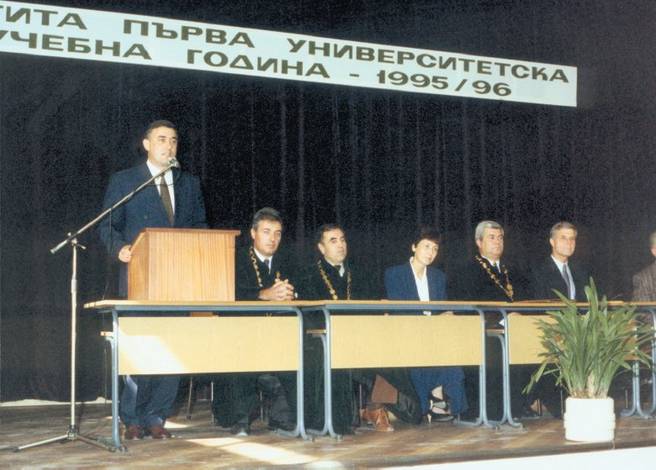
Another important stage of the development of the University of Forestry was the inclusion of the specialities taught at the University in the State Register of the Educational Stages in the higher schools of Bulgaria, following Decree No 86/12.03.1997 of the Council of Ministers. In addition, the training offered was recognised as meeting the standards of the Uniform State Requirements for these specialities.
One of the most important stages in the development of the University of Forestry is connected with the institutional accreditation of higher educational establishments in Bulgaria.
As a result of the institutional assessment, carried out in 1999, the Accreditation Council of the National Evaluation and Accreditation Agency decided that at the Council of Ministers made the following decisions:
1) the training in the University of Forestry corresponds to the requirements of the Law on Higher Education;
2) the University of Forestry should receive accreditation for training students in the three educational degrees for the term of 5 years.
On the basis of the general assessment, the Accreditation Council of the National Evaluation and Accreditation Agency granted the University of Forestry the right to train PhD students in the following specialities: Technology, Mechanization and Automation of Forestry and Harvesting (02.13.01); Technology, Mechanization and Automation of Woodworking and Furniture Industries (02.13.02); Forest Studies and Forest Materials (02.13.05); Machines and Equipment for Forestry, Harvesting, Woodworking and Furniture Industries (02.01.32); Ecology and Environment Protection (02.22.00); Forestry (04.04.00); Agronomy (04.01.00); Veterinary Medicine (04.03.00); Landscape Architecture (04.04.10); Economical Management (05.02.18); Organisational Management (05.02.21).
Afterword
The development of the higher forestry education firstly performed in the Faculty of Agronomy and Silviculture at the Sofia University, then in the Faculty of Forestry at the Agricultural Academy, in the Higher Institute of Forestry and nowadays in the University of Forestry is a scientific and educational achievement of national significance. This is the result of the dedicated and responsible work of all teaching staff from the University of Forestry – the only university for training specialists with qualifications in both biological and technical aspects of forestry in Bulgaria. There is a qualitative and quantitative increase in the teaching staff, the number of specialities and the number of undergraduate students as well as graduated specialists.
The number of candidate students in the University of Forestry has significantly increased. In the last five years the average number of competitors to be placed has been 10 to 12 people.
A total number of 12000 students have graduated from the University of Forestry since 1925 including international students from Europe, Asia, Africa and America.
From the establishment of the Faculty of Forestry under the University of Sofia in 1947 till the setting up of the Higher Institute of Forestry in 1953, Deans of the faculty were: Professor B. Stefanov (1947/1948); Professor P. Petkov (1948-1951); Associate Professor Ts. Hristov (1951); Professor M. Venedikov (1952-1953).
Vice-Deans during the same period were: Professor A. Biolchev (1948-1951), Professor Dimitar Stefanov (1951-1953) and Senior Assistant Hristo Sirakov (1952).
Rectors and Vice-Rectors after 1953:
- 1953 – 1957 – Academian Boris Stefanov; Prof. D. Stefanov, 1953 –1957; Assoc. Prof. St. Hristov, 1953 – 1957; Assoc. Prof. Ts. Hristov, 1953;
- 1957 – 1960 – Prof. Dimitar Stefanov; Assoc. Prof. St. Hristov, 1957 –1958; Assoc. Prof. Hr. Sirakov, 1957– 1960; Assoc. Prof. Sv. Nokolov, 1958 – 1960;
- 1960 – 1966 – Prof. Assen Biolchev; Assoc. Prof. Hr. Sirakov, Assoc. Prof. Sv. Nikolov, 1960 – 1962; Assoc. Prof. Al. Iliev, 1960 – 1962; Assoc. Prof. E. Enchev, 1962 – 1964;
- 1966 – 1968 – Prof. Stoichko Hristov;Prof. Yr. Duhovnikov, 1966 –1968, Assoc. Prof. P. Karadochev, 1966-1968;
- 1968 – 1972 – Prof. Hristo Sirakov; Assoc. Prof. Iv. Dobrinov, 1968 –1970; Assoc. Prof. G. Donchev, 1968-1972; Assoc. Prof. B. Bogdanov, 1970-1972; Assoc. Prof. N. Botev, 1970-1972;
- 1972 – 1979 – Prof. Alexandar Iliev; Assoc. Prof. N. Botev, 1972-1975; Assoc. Prof. R. Petrov, 1972-1975; Assoc. Prof. G. Philipov, 1972-1979; Assoc. Prof. T. Iliev, 1975-1979; Assoc. Prof. P. Karadochev, 1975-1979;
- 1979 – 1984 – Prof. Tacho Iliev; Prof. Iv. Dobrinov, 1979-1983; Assoc. Prof. Iv. Mihov, 1979-1984; Assoc. Prof. N. Kolev, 1979-1983; Assoc. Prof. A. Kavalov, 1984 -1989; Assoc. Prof. Sv. Gencheva,1983-1984;
- 1984 – 1989 – Prof. Nikola Botev; Assoc. Prof. Iv. Mihov, 1984-1987; Assoc. Prof. Sv. Gencheva, 1984-1987; Assoc. Prof. N. Pipkov, 1987-1989; Prof. P. Karadochev, 1987-1989; Assoc. Prof. A. Kavalov, 1984-1987; Assoc. Prof. Hr. Shehtov, 1987-1989;
- 1989 – 1991 – Prof. Victor Donov; Assoc. Prof. Sv. Gencheva, 1989-1991; Assoc. Prof. Hr. Shehtov, 1989-1991; Assoc. Prof. N. Pipkov, 1989-1991;
- 1991 – 1994 – Prof. Andrei Raichev;Assoc. Prof. Sl. Iliev, 1991-1994; Assoc. Prof. St. Stoikov, 1991-1994;
- 1994 – 1999 – Prof. Dimitar Kolarov;Assoc. Prof. D. Georgiev, 1994-1999; Assoc. Prof. Iv. Iovkov, 1994-1995; Assoc. Prof. V. Brezin, 1994-1995; Prof. Hr. Shehtov, 1995-1999;
- 1999 – 2003 – Prof. Dimitar Kolarov;Assoc. Prof. G. Georgiev, Assoc. Prof. N. Pipkov, and Assoc. Prof. Iv. Iliev.
- 2003 – 2007 – Prof. Nino Ninov; Prof. V. Brezin, Assoc. Prof. N. Pipkov
- 2007 – 2011 – Prof. Nino Ninov; Prof. V. Brezin, Assoc. Prof. Rumen Tomov and Assoc. prof. Petar Jelev
- 2011 – 2015 – Prof. Veselin Brezin; Prof. Ivan Paligorov, Assoc. Prof. Petar Jelev and Prof. Rumen Tomov
From 2016 Rector of the University of Forestry is Prof. Ivan Iliev with Vice-Rectors Prof. Milko Milev, Prof. Boyanka Zhelyaziva and Assoc. Prof. Neno Trichkov.
Thorough professionalism, dedication and science ethics of the founders of the higher forestry education in Bulgaria have always been an excellent example for the coming generations who should always remember the beginning and the road we have traveled so far. As far as the beginning was concerned, at the graduation of the first alumni Prof. Y. Mollov said: “The year 1925 will be remembered and will be written in gold letters in the history of Bulgarian forestry, as events of such crucial significance happen rarely in the history of peoples.”
This statement thoroughly corresponds to the basic slogan for the present and future of the university: “The University of Forestry – education with Bulgarian traditions and European standards”.
A LOOK AT THE PAST - A LOOK AT THE FUTURE
MUSEUM OF THE UNIVERSITY OF FORESTRY – guardian of our forest history
Evgeni Tsavkov, Ivan Paligorov
The museum of the University of Forestry (UF) was established on July 14, 1975 by Order N 542 of the Rector of VLTI Prof. Al. Iliev.
The idea for the museum was to reflect the development of forestry education, science and practice dating back to the liberation of Bulgaria. The realization of this idea started during the celebration of 50 anniversary of Higher forestry education – 1975.
Founder of the Museum and its first head was Prof. Svilen Nikolov. “…Very often, descendants—just one or two generations later—no longer value these documents, and the pace of modern life often compels them to part with ‘old’ and ‘unnecessary things’,” shares Prof. Nikolov. His appeal—“to collect and preserve for history and future generations everything that risks being forgotten”—remains just as meaningful today.
The main objectives of the Museum are mainly in the following areas:
- Searching, collection and storage of archival research materials, documents, articles and other materials related to the development of forestry in Bulgaria;
- Processing, systematization and documentary coverage of the historical development of education, science and practice of the forestry in Bulgaria, the timber, woodworking and furniture industry, the landscape architecture and environmental protection, wildlife management, agriculture, veterinary medicine, etc.;.
- Promoting and realizing the revival-era ideals in Bulgaria of preserving the memory of generations connected to one of the nation’s greatest treasures — its forests and the people who have dedicated their lives to them.
One of the most valuable and significant achievements of the early leaders of the newly established Museum was the collection of written memoirs from veterans in the field of forestry. Among them, several deserve special mention: Stefan Sinivirski, a graduate of Lviv, who played a key role in the inventorying of forests in the then-little-known Strandzha region, and whose foresight led to the initiation of the protected area “Gorna Elenitsa–Silkosia”; Zahari Bachvarov and Todor Ivanov, members of the first graduating class of the Faculty of Agronomy and Forestry; and Dimitar Zagorov, head of the Department of Forests, Hunting, and Fisheries. Many more names deserve recognition, but the list is too long to include in full.
A significant part of the museum’s collection is the donated book archive—including books, textbooks, proceedings, article reprints, manuscripts, and more—whose preservation deserves serious consideration and more active effort. Today, there are viable opportunities for this, such as digitizing books and publications that have long become bibliographic rarities. Examples include: “The Natural Riches of United Bulgaria” by Hermann(gild) Škorpil (1884); The earliest forestry regulations from the time of Ottoman rule (1870); The Annals of the Bulgarian Naturalists’ Society from 1896–1897;
The first forest map of Bulgaria (1894), created by Konstantin; Baikushev during his tenure as forester in the Tatar Pazardzhik region; The original manuscript of The Flora of Bulgaria by Nikoly Stoyanov and Boris Stefanov; The first drafts of university textbooks in Dendrology and Wood Anatomy by Boris Stefanov; reports and written impressions by various foreign experts who visited Bulgaria, explored its forests, and showed interest in the country’s forest management system and many other valuable and fascinating materials.
One of the most valuable assets of the University of Forestry Museum collection is its archive of photographs and negatives dating back to the late 19th century. For example, the archives of Yordan Mitrev and Prof. Methodi Ruskov contain glass plate negatives—a medium used in photography during that period. Between the Museum’s founding with a scientific archive (1975–2012) and the present day, over 955 archival items have been collected and catalogued. The majority of these—600 items—were gathered by V. Dochev.
Archives contain:
- Records of private individuals – documents, photos, books, memories, publications, manuscripts, awards. Also a number of paintings by our alumni were submitted to the Museum;
- Archives of institutions, forestry services, forestry colleges, environmental organizations and other celebrations.
The materials related to the field of education include content about:
- Our forestry students abroad (France, Germany, Austria, Russia, Poland, Yugoslavia) and Bulgaria in Sofia University and in the UF;
- Students in the forestry colleges;
- The forest guards, carpenters and others.
The collections in the field of science and practice are collected and continue to collect valuable materials, copyright licenses and documents relating to the development of forestry in Bulgaria and having great scientific and practical value.
Since 1989 the museum director was Prof. Georgy Puhalev.
From 2003 until now director of the museum is Prof. Ivan Paligorov.
For the period from 1975-1986, the first curator of the Museum was eng. Veselin Dochev who made great efforts to track and store the bulk of collected materials and documents. After him, for a period of several years, engineer Maria Belyakova, Delyana Peeva, Radina Tsacheva and Galina Danailova work as curators. From 2010 until now for organizing the Museum Chief Assistant Evgeni Tsavkov was appointed , who continues the collection, preservation, processing, and promotion of the materials.
At present, the Museum is actively working on digitizing the information recorded in the archival books. We express our hope that in the near future, we will be able to “exhibit” the contents of the archival units—along with the names of the donors, whose generosity and responsiveness made the existence of this museum possible.
In these challenging times, we hope to acquire the necessary equipment that will allow us to share our rich and fascinating forestry history with a wider audience.